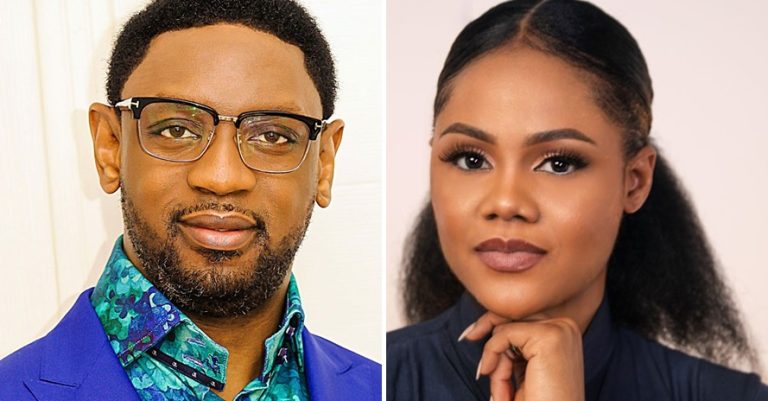
In the early hours of June 2019, Nigeria’s religious and social media landscapes were rocked by a revelation that sent shockwaves across the nation. Busola Dakolo, a prominent photographer and wife of celebrated musician Timi Dakolo, stepped into the public eye not to showcase her artistic vision, but to recount a deeply personal story of alleged abuse. She accused Pastor Biodun Fatoyinbo, the senior pastor of COZA Church, of raping her as a teenager. Her testimony, raw and unflinching, immediately divided public opinion, some lauded her courage, while others questioned her motives, sparking one of the most widely discussed scandals in Nigerian religious circles.
Busola’s account was harrowing. She alleged that Fatoyinbo, a man of immense spiritual authority and influence, exploited her vulnerability during her formative years. Two separate incidents formed the core of her claim: one occurring in the privacy of her family home, the other along a secluded road. These allegations, she explained, were not just personal grievances, they were reflective of a broader pattern of unchecked power within religious institutions. With the weight of her public persona and her husband’s support, Busola took the bold step of filing a formal complaint with the Nigerian police, seeking justice not only for herself but also for the countless others whose voices were silenced by fear and reverence.

On the other side, Biodun Fatoyinbo’s response was swift and absolute. Through public statements and legal representation, he denied all allegations, describing them as “fallacious” and “non-existent.” He asserted that his interactions with Busola were strictly pastoral, emphasizing that he had never engaged in any sexual misconduct. The church, too, rallied behind him, framing the allegations as an orchestrated attempt to tarnish his reputation and destabilize COZA’s influence. To the public, this defensive posture amplified the tension: a powerful religious leader steadfastly denying claims of sexual assault versus a courageous woman seeking recognition of her trauma.
As the story unfolded, institutional and societal structures came under scrutiny. The Christian Association of Nigeria (CAN) and the Pentecostal Fellowship of Nigeria (PFN) attempted to investigate the claims, but procedural complications and non-attendance by Fatoyinbo highlighted the limitations of internal accountability mechanisms within religious organizations. Meanwhile, social media erupted with commentary, support, and, unfortunately, harassment, underscoring how digital platforms could serve both as instruments of justice and avenues for victim-blaming. Gender advocacy groups pointed out that the public vilification of Busola reflected entrenched societal biases against women who speak out, particularly against revered men of faith.
Beyond the immediate drama, the controversy illuminated deeper cultural and systemic issues. Nigeria’s legal and social frameworks often struggle to address sexual assault allegations against influential figures, especially when those figures occupy sacred roles in society. The eventual dismissal of Busola’s case by the courts, reportedly due to insufficient corroborative evidence, left many disheartened, raising questions about access to justice for survivors and the enduring protection of powerful men within hierarchical institutions. Scholars have noted that such cases reveal a tension between spiritual authority and civic accountability, a tension that resonates far beyond the walls of COZA Church.
Yet, the story is not merely one of accusation and defense. It is also a narrative of courage, societal introspection, and the ongoing struggle for balance between reverence and accountability. Busola Dakolo’s decision to speak publicly challenged a culture of silence, demonstrating that even in the face of overwhelming power, voices seeking justice can emerge. At the same time, Fatoyinbo’s denial and the church’s unwavering support highlight the societal difficulties in reconciling respect for religious authority with the imperative of truth and justice.
In retrospect, the Busola Dakolo vs. Biodun Fatoyinbo case serves as a mirror for Nigerian society. It forces reflection on the intersections of religion, gender, power, and justice. More than a scandal, it is a story about how institutions respond when their leaders are accused, how society mediates between belief and skepticism, and how survivors of abuse navigate systems often stacked against them. The controversy may have ended in legal terms, but its implications continue to ripple through discussions about accountability, morality, and the courage it takes to confront power.
In telling this story, one sees that truth is rarely simple and justice rarely immediate. Yet, the courage of individuals like Busola Dakolo illuminates paths toward societal reckoning, reminding us that every allegation carries the potential to challenge entrenched power structures and provoke meaningful dialogue. The story remains unfinished, not in its events, but in its enduring lessons for Nigerian society and beyond.