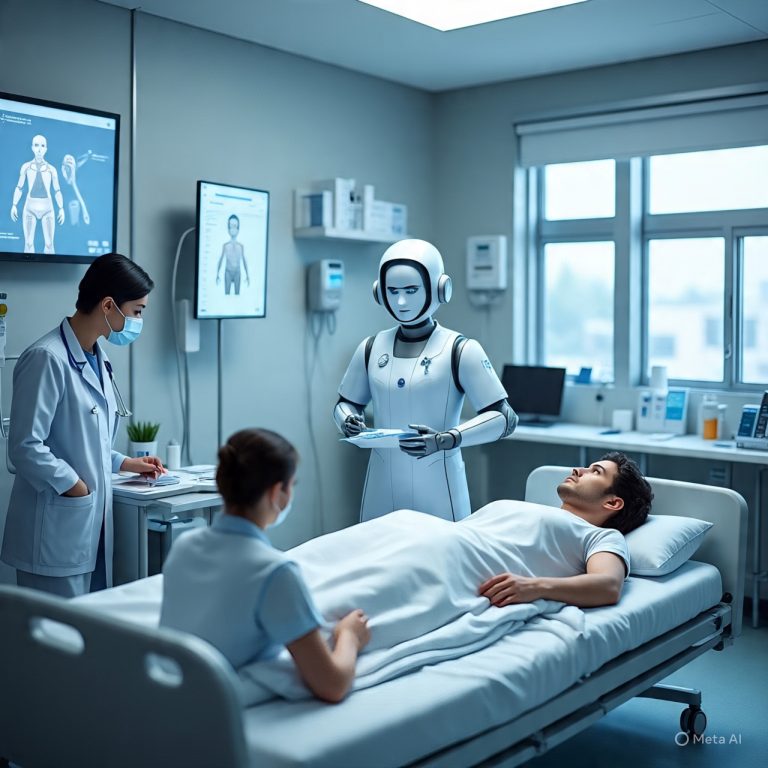
Artificial intelligence (AI) is rapidly transforming industries worldwide, but its impact on healthcare, particularly diagnostics, is nothing short of revolutionary. From radiology to pathology, AI systems are helping clinicians make faster, more accurate decisions, improving patient outcomes and reshaping the future of medicine.
Here’s a look at how AI is changing the landscape of healthcare diagnostics, the opportunities it creates, and the challenges we must navigate.
AI in Medical Imaging
Medical imaging is one of the earliest and most impactful applications of AI in diagnostics. Deep learning algorithms can now analyze X-rays, CT scans, MRIs, and ultrasounds with accuracy comparable to or even exceeding, that of human experts.
AI helps:
✅ Detect lung nodules in chest scans, enabling early diagnosis of lung cancer
✅ Identify signs of stroke on brain imaging in minutes, speeding up critical interventions
✅ Recognize fractures, tumors, or organ abnormalities
✅ Reduce radiologist fatigue by flagging high-risk cases for priority review
These tools not only boost diagnostic speed but also make advanced diagnostics accessible in under-resourced settings.
AI in Pathology & Laboratory Medicine
AI is also revolutionizing pathology by digitizing and analyzing tissue samples:
✅ Algorithms can classify cancerous vs. healthy cells with high precision
✅ Automated systems detect patterns in blood smears for diseases like malaria
✅ AI can screen for rare genetic disorders by analyzing subtle morphological features in cells
Digital pathology, combined with AI, enables remote consultations, reducing the need for patients to travel long distances for specialist opinions.
AI in Ophthalmology
Eye diseases like diabetic retinopathy, macular degeneration, and glaucoma can cause blindness if not diagnosed early. AI systems trained on millions of retinal images can now:
✅ Detect diabetic retinopathy with accuracy matching experienced ophthalmologists
✅ Monitor progression of retinal diseases over time
✅ Provide instant assessments in primary care or rural clinics
In some countries, AI-based retinal scanners are already being used to screen large populations cost-effectively.
AI in Dermatology
Skin diseases are among the most common reasons people seek medical care. AI-powered apps and tools can:
✅ Analyze photos of skin lesions to distinguish benign moles from malignant melanomas
✅ Guide users on whether to seek a dermatologist’s opinion
✅ Assist clinicians by suggesting potential diagnoses based on images and patient history
While these tools don’t replace doctors, they can democratize early detection and empower patients to seek timely care.
AI in Predictive Diagnostics
Beyond pattern recognition, AI can predict health risks by analyzing electronic health records (EHRs), genetic data, and lifestyle information. These systems can:
✅ Forecast risk of heart attacks or strokes based on patterns invisible to the human eye
✅ Identify patients likely to develop sepsis in intensive care units
✅ Support personalized medicine by tailoring diagnostics and treatments to an individual’s unique risk profile
Predictive diagnostics can help shift healthcare from reactive to proactive, saving lives and reducing costs.
Benefits of AI in Diagnostics
✅ Speed: AI can analyze complex data in seconds, expediting diagnosis
✅ Accuracy: Reduces human errors and variability between clinicians
✅ Accessibility: Brings diagnostic capabilities to areas lacking specialists
✅ Efficiency: Frees up healthcare professionals to focus on patient care
Challenges & Ethical Considerations
Despite the promise, integrating AI into diagnostics isn’t without hurdles:
⚠️ Bias: AI models trained on unrepresentative datasets can produce inaccurate or unfair results for certain populations
⚠️ Transparency: Many AI systems function as “black boxes,” making it hard to understand how they reach conclusions
⚠️ Data Privacy: Large amounts of sensitive health data are needed to train AI, raising privacy and security concerns
⚠️ Regulation: Determining standards for approval, oversight, and accountability remains an ongoing challenge
Addressing these issues is critical to ensuring AI benefits all patients safely and equitably.
The Future of AI in Diagnostics
AI will not replace doctors but will increasingly become a trusted partner, augmenting clinicians’ expertise, improving accuracy, and enabling earlier interventions. Ongoing advances in computing power, data availability, and algorithm design will continue to expand AI’s diagnostic capabilities.
Collaboration between healthcare professionals, AI researchers, policymakers, and patients will be key to building systems that are effective, ethical, and inclusive.
Artificial intelligence is redefining what’s possible in healthcare diagnostics. By combining human judgment with AI’s analytical power, we can detect diseases earlier, tailor treatments more precisely, and ultimately improve health outcomes for millions worldwide. As we harness this technology, thoughtful implementation will ensure its benefits are shared broadly and responsibly.
Related Posts: