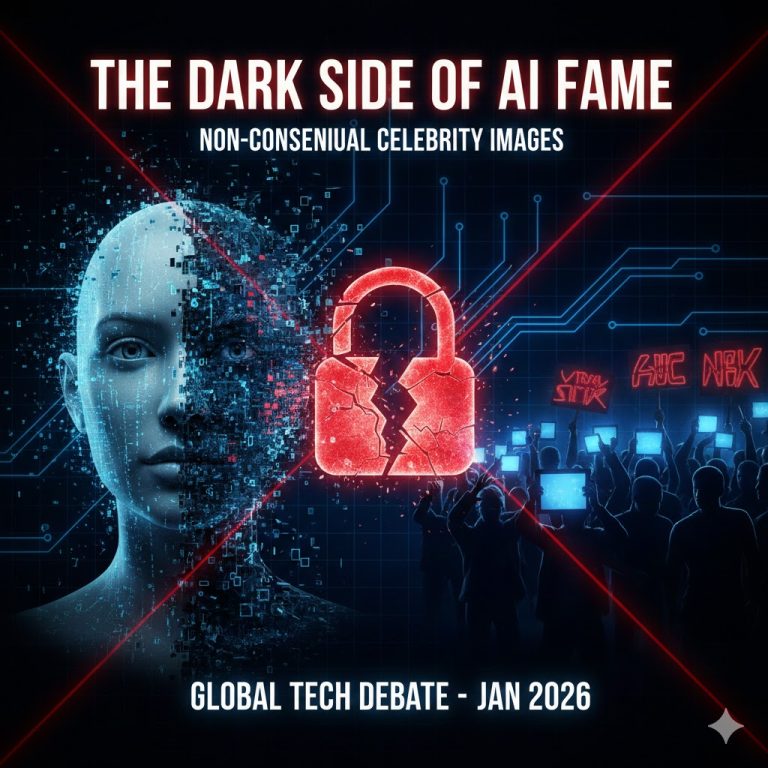
In January 2026, a new wave of controversy swept through social media, exposing one of the most troubling consequences of artificial intelligence: the rapid spread of ai-generated non-consensual celebrity images. What began as a few viral posts quickly escalated into a global conversation about privacy, ethics, consent, and the urgent need for regulation in the age of generative AI.
Non-Consensual Celebrity Images: What Happened?
Across platforms like X (formerly Twitter), Instagram, Telegram, and fringe forums, AI-generated images depicting celebrities in fabricated scenarios began circulating widely. These images were not real photographs, yet they appeared highly convincing, thanks to advances in generative AI models that can recreate faces, expressions, and body language with alarming realism.
Several high-profile celebrities, particularly women, were targeted. The images were created without consent, often portraying them in compromising or misleading situations. Within hours, reposts, screenshots, and algorithmic amplification pushed the content far beyond its original sources.
By mid-January, the issue had moved from gossip blogs to mainstream tech and news outlets.
Non-Consensual Celebrity Images: Why This Time Was Different
AI-generated celebrity images are not new, but January 2026 marked a turning point for three key reasons:
- Unprecedented Realism
The images were nearly indistinguishable from real photos, making it harder for audiences to identify them as fake. - Speed of Viral Spread
Social media algorithms amplified the content faster than platforms could moderate or remove it. - Public Backlash from Celebrities and Fans
Several celebrities, through representatives, condemned the images as violations of dignity and personal autonomy, while fans demanded accountability from tech companies.
The Emotional and Reputational Impact
While celebrities are public figures, experts emphasized that fame does not eliminate the right to consent. These AI-generated images risked damaging reputations, spreading misinformation, and causing emotional distress, not only to celebrities but also to their families and audiences.
Digital rights advocates warned that what happens to celebrities today could easily affect private individuals tomorrow, especially teenagers and non-public figures with limited legal protection.
Non-Consensual Celebrity Images: Tech Companies Under Fire
As the controversy grew, attention shifted to the companies behind both AI tools and social media platforms. Critics asked tough questions:
- Why were AI tools allowed to generate realistic human likenesses without safeguards?
- Why did social media platforms struggle to remove harmful content quickly?
- Who should be legally responsible: the creator, the platform, or the AI developer?
Some AI companies responded by promising stricter filters and watermarking systems, while social media platforms announced faster takedown procedures. However, many experts described these steps as reactive rather than preventative.
The Push for Regulation
January 2026 also saw renewed calls for AI-specific legislation, particularly around:
- Consent and likeness rights
- Mandatory labeling of AI-generated images
- Criminal penalties for malicious misuse
- Protection for minors and vulnerable individuals
Lawmakers in the U.S., Europe, and parts of Africa, including Nigeria, began referencing the controversy in discussions about digital safety laws and influencer protection frameworks.
A Cultural Wake-Up Call
Beyond laws and policies, the incident sparked a broader cultural reckoning. Internet users began questioning their role in sharing unverified content, while creators debated ethical boundaries in using AI for entertainment and satire.
For many, the episode served as a reminder that technology evolves faster than society’s rules, and without ethical guardrails, innovation can quickly turn harmful.
What This Means Going Forward
The January 2026 AI image scandal may be remembered as a defining moment in the fight for digital consent. It highlighted the urgent need for collaboration between tech companies, lawmakers, creators, and everyday users.
As AI continues to blur the line between real and artificial, one principle is becoming clear: just because something can be created doesn’t mean it should be shared.
Related Posts: