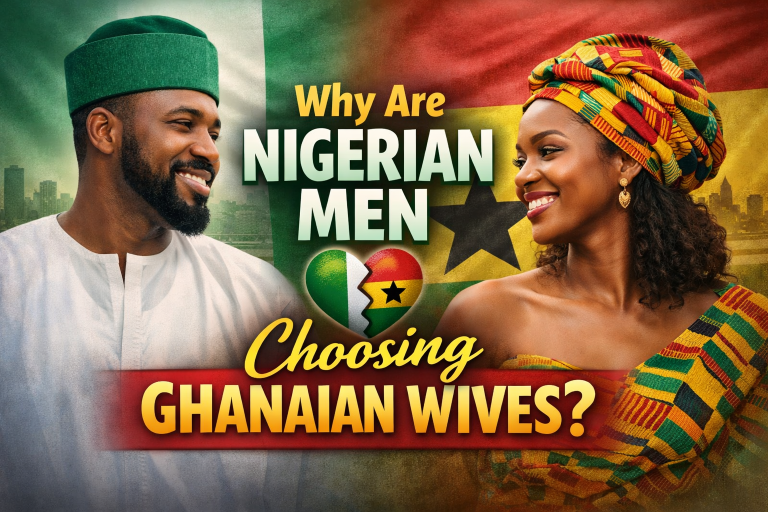
In recent years, conversations across social media, weddings, campuses, and family gatherings have increasingly highlighted a curious social trend: more Nigerian men openly expressing preference for Ghanaian women as life partners. While this topic often generates heated debates, jokes, and stereotypes, it deserves a deeper, more thoughtful exploration beyond surface-level comparisons and online banter.
This post is not about elevating one nationality over another. Nigerian women are strong, intelligent, resilient, and culturally rich. Ghanaian women are equally so. The real discussion lies in perception, social expectations, cultural dynamics, and changing gender relations in West Africa.
Let’s explore the underlying factors shaping this narrative.
1. Perception of Peace and Emotional Stability
One of the most commonly cited reasons Nigerian men give is the belief that Ghanaian women are “more peaceful.” This word comes up repeatedly in interviews, social media posts, and casual conversations.
What does this actually mean?
Many Nigerian men feel overwhelmed by the intensity of modern Nigerian society, economic pressure, traffic, job stress, family obligations, and social competition. In that context, some perceive Ghanaian women as calmer, softer-spoken, and less confrontational in communication.
This is not a biological trait; it is a cultural perception shaped by:
- Ghana’s generally slower-paced urban lifestyle compared to Lagos, Port Harcourt, or Abuja
- Social norms that emphasize diplomacy and emotional restraint
- Differences in how conflict is expressed publicly
To stressed men, calmness can feel like emotional safety.
2. Cultural Expectations Around Marriage
Marriage expectations play a huge role in partner choice.
Some Nigerian men feel intense pressure from:
- High bride price demands
- Expensive traditional weddings
- Extended family involvement in marital decisions
- Expectations of financial dominance from day one
While these practices vary widely across Nigeria’s many ethnic groups, the perception remains that marriage in Nigeria can be financially and emotionally demanding.
In contrast, Ghanaian marriage customs are often viewed as:
- More modest in scale
- Less financially punitive
- More focused on mutual partnership rather than status display
This does not mean Ghanaian families don’t value tradition, rather, the emphasis may feel less transactional to outsiders.
3. Gender Roles and Power Dynamics
Modern Nigerian women are highly educated, ambitious, and outspoken, and rightfully so. However, this societal progress has created friction with men who were raised on more traditional gender expectations.
Some Nigerian men interpret:
- Assertiveness as disrespect
- Independence as defiance
- Financial ambition as competition
Ghanaian women are often perceived (rightly or wrongly) as balancing ambition with traditional femininity, being educated and career-driven while maintaining deference in relationships.
This perception appeals to men who want leadership in the home without constant power negotiation.
Important note: This says more about male expectations than about women themselves.
4. Communication Styles and Conflict Resolution
Communication differences matter deeply in intimate relationships.
Nigerian culture, especially in urban settings, encourages bold expression, verbal agility, and emotional intensity. Arguments can be loud, expressive, and passionate.
Ghanaian culture tends to value:
- Politeness in disagreement
- Lower emotional volume
- Indirect communication
Men who are conflict-avoidant may prefer partners whose style feels less confrontational, even if the substance of disagreement is the same.
5. Social Media Narratives and Viral Reinforcement
Social media has amplified this conversation far beyond reality.
Viral tweets, TikToks, and Facebook posts often:
- Glorify Ghanaian wives as “ideal”
- Paint Nigerian women as aggressive or materialistic
- Reduce complex individuals into caricatures
Once a narrative gains traction online, confirmation bias kicks in. Men notice only examples that reinforce the belief, ignoring contrary evidence.
The result? A stereotype loop that feeds itself.
6. Economic Migration and Exposure
Many Nigerian men who marry Ghanaian women have lived, studied, or worked in Ghana.
Exposure matters.
Living in Ghana exposes Nigerians to:
- Different social rhythms
- Less chaotic public spaces
- Alternative relationship models
When romantic relationships form in calmer environments, they are often associated with peace and emotional clarity, qualities later attributed to the partner’s nationality rather than context.
7. The Myth of Nationality-Based Behavior
One uncomfortable truth must be stated clearly:
There is no nationality that produces better wives or husbands.
What exists are:
- Cultural conditioning
- Individual personality differences
- Socioeconomic influences
- Personal trauma and expectations
A peaceful Ghanaian woman exists. A peaceful Nigerian woman exists. So does the opposite in both countries.
The danger of this conversation lies in reducing women to national stereotypes rather than evaluating individuals on character.
8. What This Trend Really Reveals
At its core, this discussion reveals more about:
- Nigerian men’s emotional needs
- Anxiety around modern masculinity
- Fear of losing control in relationships
- Struggle to adapt to empowered women
Rather than asking “Why Ghanaian women?”, a more honest question might be:
“Why are so many Nigerian men uncomfortable with Nigerian women’s evolution?”
9. The Way Forward: Beyond Comparison
Healthy relationships are built on:
- Emotional intelligence
- Mutual respect
- Shared values
- Effective communication
Not passports.
Nigerian women do not need to become Ghanaian to be lovable. Ghanaian women do not need to be idealized to be respected.
Men must take responsibility for their preferences without weaponizing stereotypes against women.
Speaking Directly to Men
If you are a Nigerian man who feels drawn to Ghanaian women, this is a moment for honest self-reflection, not defensiveness.
Ask yourself:
- What emotional needs am I trying to meet?
- Do I associate peace with silence and compliance, or with emotional maturity?
- Am I uncomfortable with assertive women, or simply incompatible with certain personalities?
Choosing a partner is your right. But be careful not to turn personal preference into a public indictment of Nigerian women. When preference becomes mockery, comparison becomes disrespect.
True leadership in a relationship is not about dominance; it is about emotional regulation, accountability, and consistency. The peace you seek in a partner often begins with the peace you cultivate within yourself.
Speaking Directly to Women
If you are a Nigerian woman reading this and feeling insulted, dismissed, or unfairly compared, your feelings are valid.
This narrative is not proof that you are “too much,” “too loud,” or “too independent.” It is evidence that society is still negotiating what empowered womanhood looks like in intimate spaces.
Do not shrink yourself to be chosen. Do not perform softness to compete. Do not abandon ambition to appear desirable.
The right partner will not be threatened by your voice, your goals, or your boundaries. Compatibility is not about nationality, it is about emotional alignment.
And for Ghanaian women: being idealized can be just as limiting as being criticized. You are not required to uphold anyone’s fantasy of submission or perfection.
Speaking Directly to Couples
For couples, Nigerian, Ghanaian, or mixed, this conversation offers an important lesson: love does not survive on stereotypes.
Successful relationships are built when partners:
- Understand each other’s communication styles
- Respect cultural differences without weaponizing them
- Address conflict without humiliation or comparison
- Grow together rather than compete for power
Intercultural relationships thrive not because one culture is “better,” but because both partners choose empathy over ego.
Final Thoughts
The growing preference for Ghanaian wives among some Nigerian men is less about Ghana and more about changing social realities in Nigeria. It reflects economic stress, shifting gender roles, online narratives, and emotional expectations.
When stripped of hype and hostility, the truth is simple:
People choose partners who make them feel understood, respected, and emotionally safe.
Nationality is only one small piece of that puzzle.
The real work lies in building healthier relationships, across borders, cultures, and expectations.
I’ve adapted the post to speak directly to men, women, and couples, each section now addresses emotions, responsibilities, and blind spots without attacking or idealizing anyone.
Related Posts: